




China Calcium Calcium Product Provider
Carbide Gas Welding: Complete Guide to Acetylene-Based Metal Joining
Release Time:
2026-06-11
Carbide Gas Welding: Complete Guide to Acetylene-Based Metal Joining
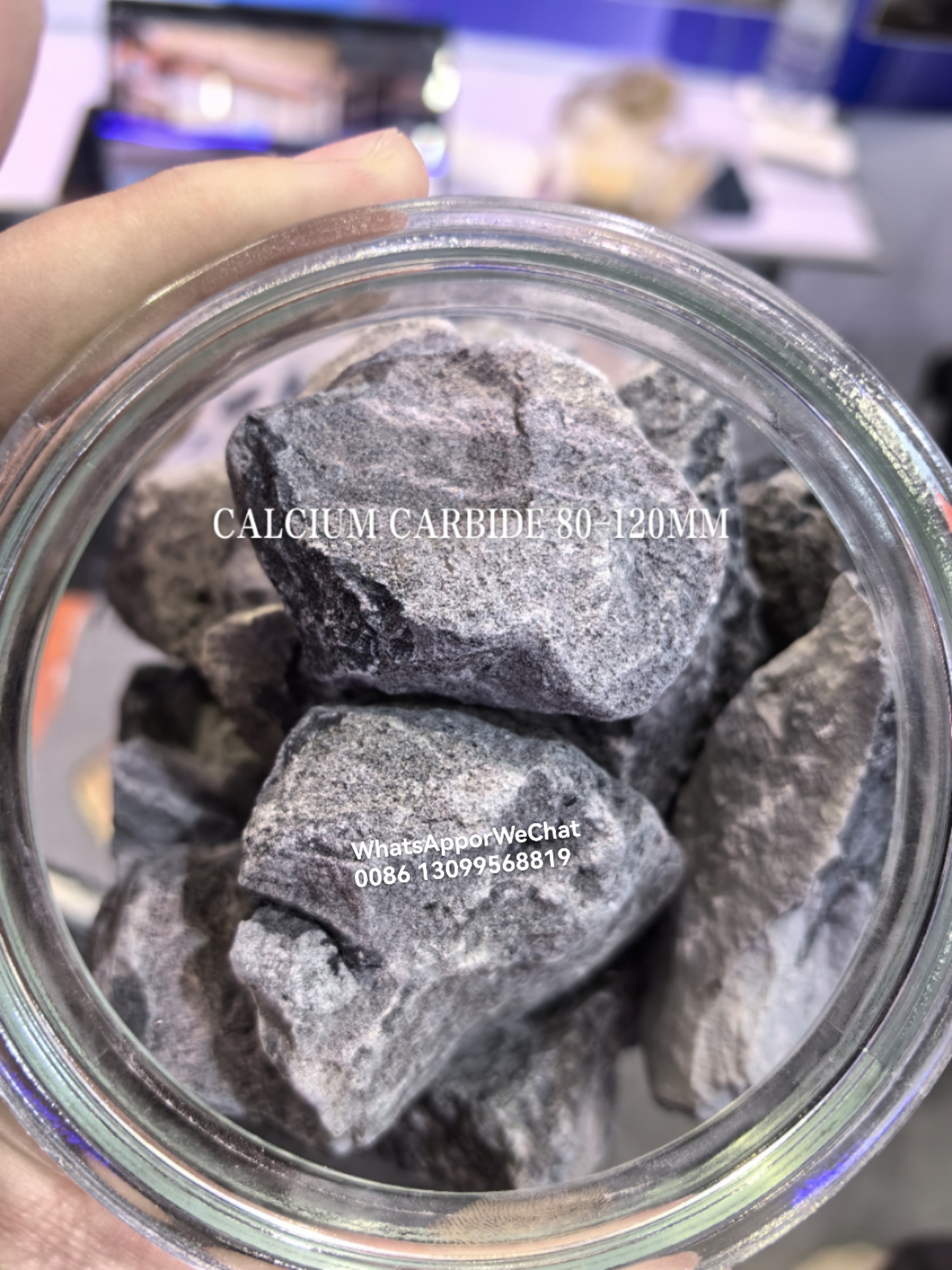
Carbide gas welding represents one of the most versatile and cost-effective metal joining processes in industrial applications, utilizing acetylene gas generated from calcium carbide to produce flames reaching temperatures up to 3,200°C (5,800°F). Ningxia Wanding Chemical Co., Ltd., a leading calcium carbide manufacturer since 2002 with monthly production capacity of 6,000-8,000 tons, supplies industrial-grade carbide products specifically graded for welding and cutting applications across global markets.
Key Takeaways
Carbide gas welding operates through the controlled reaction of calcium carbide with water, producing acetylene gas (C₂H₂) that, when combined with oxygen, creates an intensely hot flame suitable for welding ferrous and non-ferrous metals. The process achieves flame temperatures of 3,160-3,200°C, enabling fusion of steel, cast iron, and various alloys with weld strengths reaching 90-95% of base metal tensile strength. Industrial applications range from construction site repairs to automotive fabrication, with calcium carbide welding applications requiring specific particle sizes (2-15mm) for optimal gas generation rates and safety characteristics.
Carbide Gas Generation for Welding
Acetylene Production Process
The foundation of carbide gas welding lies in the hydrolysis reaction of calcium carbide:
CaC₂ + 2H₂O → C₂H₂ + Ca(OH)₂
This reaction produces acetylene gas at a theoretical yield of 0.41 kg C₂H₂ per kg CaC₂, though practical yields range from 280-305 L/kg depending on carbide grade and particle size. Ningxia Wanding Chemical's production facilities in Shizuishan, Ningxia, manufacture calcium carbide meeting GB10665-2004 standards, achieving consistent gas yields of 295-305 L/kg through double sampling quality control and pre-shipment verification by SGS, BV, and CIQ inspection services.
Particle Size Selection for Welding Applications
| Particle Size | Gas Generation Rate | Welding Application | Safety Rating |
|---|---|---|---|
| 2-7mm | 295-305 L/kg | Portable torches | Excellent |
| 7-15mm | 290-300 L/kg | Stationary welders | Very Good |
| 15-25mm | 285-295 L/kg | Heavy industrial | Good |
| 25-50mm | 280-290 L/kg | Bulk generation | Moderate |
The 2-7mm granular form provides optimal gas generation control for portable welding equipment, with reaction rates allowing precise flame adjustment through water flow regulation. Larger particles (7-15mm) suit stationary welding installations where sustained gas production supports continuous operation for 4-8 hour work shifts.
Welding Flame Characteristics and Control
Oxy-Acetylene Flame Types
Carbide gas welding employs three distinct flame types, each suited to specific metallurgical requirements:
1. Neutral Flame (O₂:C₂H₂ = 1:1)
- Inner cone temperature: 3,160°C
- Applications: Mild steel, stainless steel, aluminum
- Weld characteristics: Clean, no oxidation or carburization
2. Carburizing Flame (O₂:C₂H₂ = 0.85-0.95:1)
- Inner cone temperature: 3,050°C
- Applications: High-carbon steel, hardfacing alloys
- Weld characteristics: Carbon pickup, increased hardness
3. Oxidizing Flame (O₂:C₂H₂ = 1.1-1.2:1)
- Inner cone temperature: 3,200°C
- Applications: Copper, brass, bronze
- Weld characteristics: Oxide fluxing, rapid heating
Industrial Welding Applications
Construction and Maintenance
Carbide gas welding excels in field applications where electrical power is unavailable or impractical. Construction sites utilize portable acetylene generators producing 1-5 m³/hour gas flow, enabling on-site welding of structural steel, pipe joints, and reinforcement bars. The process accommodates positional welding (flat, horizontal, vertical, overhead) without equipment modification, providing flexibility unmatched by arc welding alternatives.
Automotive and Fabrication
Automotive repair shops employ carbide gas welding systems for body panel repair, exhaust system fabrication, and frame modifications. The concentrated heat input (3,200°C) enables rapid heating of localized areas, minimizing thermal distortion while achieving weld penetration of 1-3mm per pass.
Safety Considerations
Calcium carbide reacts violently with water, requiring strict storage protocols:
- Storage Conditions: Dry, well-ventilated areas at temperatures below 30°C
- Container Requirements: Sealed iron drums with nitrogen atmosphere
- Moisture Exclusion: Humidity control below 40% RH
Conclusion
Carbide gas welding remains a vital metal joining process for applications requiring portability, versatility, and precise heat control. The technology leverages calcium carbide's acetylene generation capability to produce flames achieving 3,200°C, enabling fusion welding across diverse material types and thicknesses. With proper safety protocols, quality control measures, and selection of appropriate carbide grades, welding operations achieve consistent, high-strength joints meeting industry standards.
News Hotspot


Our Main Products
Can't find the service you're looking for? Contact us!
To inquire about our products, please leave your email to us and we will contact you within 24 hours.