




China Calcium Calcium Product Provider
Calcium Carbide Granules: Industrial Applications and Production Process
Release Time:
2026-06-11
Calcium Carbide Granules: Industrial Applications and Production Process
Calcium carbide granules represent a critical industrial material produced through high-temperature electrochemical processes, serving as a primary feedstock for acetylene gas generation, steel desulfurization, and chemical synthesis applications. Ningxia Wanding Chemical Co., Ltd., operating since 2002 with monthly production capacity of 6,000-8,000 tons, manufactures industrial-grade calcium carbide granules meeting GB209-2006 standards and verified by SGS, BV, and CIQ inspections.
Key Takeaways
Calcium carbide granules (CaC₂) are produced at approximately 2,200°C in electric arc furnaces from lime and coke, achieving gas yields of 295-305 L/kg depending on particle size. The 2-7mm granular form offers enhanced reaction efficiency, superior safety characteristics, and optimized storage properties compared to lump or powder alternatives. Primary applications include acetylene gas production for metal cutting and welding, steelmaking desulfurization, and calcium cyanamide synthesis for nitrogen fertilizers.
Calcium Carbide Granule Production Process
The manufacturing of calcium carbide granules begins with the electrothermal reduction of lime (CaO) and coke (C) in electric arc furnaces operating at temperatures around 2,200°C (3,990°F). This energy-intensive process, known as the Frank-Caro process, requires approximately 3,000-3,500 kWh of electrical energy per ton of calcium carbide produced, making production costs highly dependent on electricity prices.
The calcium carbide granules manufacturing process involves several critical stages: raw material preparation, furnace operation, tapping and solidification, crushing and sizing, and quality control testing. Raw materials must meet stringent specifications—lime should contain at least 95% CaO with low sulfur and phosphorus content, while coke requires fixed carbon content exceeding 85% with controlled ash and volatile matter levels.
Following furnace tapping, molten calcium carbide solidifies into large masses that undergo mechanical crushing and screening operations to achieve specified particle size distributions. According to GB10665-2004 standards, industrial calcium carbide must demonstrate minimum CaC₂ purity of 90%, with gas yield serving as the primary quality indicator—295 L/kg for standard grade, 300 L/kg for first grade, and 305 L/kg for premium grade products.
Particle Size Specifications and Selection Criteria
Calcium carbide granules are available in various size ranges, each suited to specific industrial applications:
| Particle Size | Primary Application | Gas Yield (L/kg) | Reaction Rate |
|---|---|---|---|
| 2-7mm | Acetylene generators | 295-305 | Fast, controllable |
| 7-15mm | Industrial acetylene | 290-300 | Moderate |
| 15-25mm | Large-scale production | 285-295 | Slower, sustained |
| 25-50mm | Steel desulfurization | 280-290 | Gradual |
| 50-80mm | Bulk acetylene plants | 275-285 | Extended reaction |
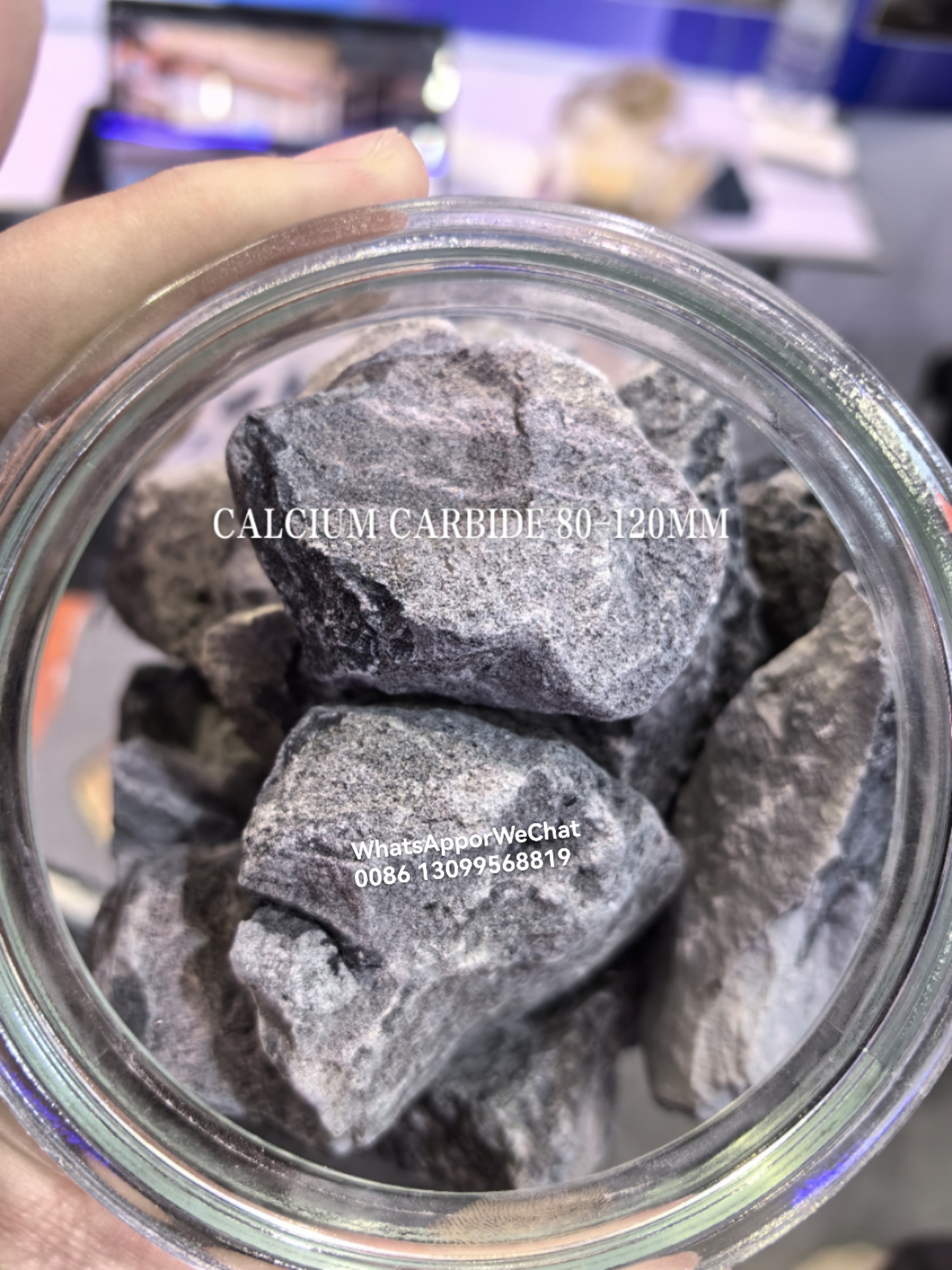
The 2-7mm granular form provides optimal balance between reaction speed and controllability, making it the preferred choice for portable acetylene generators and small-to-medium industrial applications. Larger particles (25-50mm, 50-80mm) suit steel desulfurization processes where sustained, controlled calcium release improves impurity removal efficiency.
Industrial Applications and Technical Requirements
Acetylene Gas Production
The predominant application of calcium carbide granules involves acetylene generation through hydrolysis reactions. When calcium carbide contacts water, it produces acetylene gas (C₂H₂) and calcium hydroxide according to the equation: CaC₂ + 2H₂O → C₂H₂ + Ca(OH)₂. This reaction provides a portable, on-demand acetylene source for metal cutting, welding, and chemical synthesis operations.
Gas yield specifications directly impact operational economics—granules with 305 L/kg yield generate approximately 5-7% more acetylene from equivalent input material compared to 295 L/kg grades. Ningxia Wanding Chemical's production facilities, located in Shizuishan city near raw material sources, achieve consistent gas yields of 295-305 L/kg through rigorous quality control including double sampling testing during processing and pre-shipment verification.
Steelmaking Desulfurization
In steel production, calcium carbide granules function as powerful desulfurization agents. When injected into molten iron or steel, calcium from CaC₂ combines with sulfur impurities, forming calcium sulfide (CaS) that removes from the melt as slag. This process reduces sulfur content from typical blast furnace levels of 0.03-0.05% to final steel specifications below 0.01%, improving mechanical properties and weldability.
Desulfurization efficiency depends on particle size distribution and injection parameters. Granules in the 25-50mm range provide optimal residence time in molten metal, allowing complete reaction before floating to the slag layer. Industrial steel plants typically achieve 60-80% sulfur removal rates using calcium carbide injection, with precise control enabling consistent final sulfur levels below 5 ppm for high-grade steel products.
Calcium Cyanamide Production
Calcium carbide serves as the primary feedstock for calcium cyanamide (CaCN₂) production through nitrogen fixation at 1,000-1,100°C in electric furnaces. This process, known as the Frank-Caro cyanamide process, converts CaC₂ to CaCN₂ and carbon according to: CaC₂ + N₂ → CaCN₂ + C. The resulting calcium cyanamide finds extensive application as a nitrogen fertilizer and chemical intermediate for pharmaceuticals and polymer production.
Quality Control and Safety Considerations
Technical Specifications
Industrial-grade calcium carbide granules must conform to established specifications:
- CaC₂ Purity: Minimum 90% (premium grades exceed 92%)
- Gas Yield: 295-305 L/kg depending on grade
- Particle Size Distribution: Within specified tolerance (±10%)
- Moisture Content: Below 0.5% in sealed packaging
- Phosphorus Content: Maximum 0.06% (prevents phosphine generation)
Ningxia Wanding Chemical maintains quality assurance through multi-stage testing: raw material inspection, in-process sampling, air pressure testing of sealed drums, and final pre-shipment verification. Third-party inspection services (BV, SGS, CCIC, CIQ) provide independent certification for international shipments.
Safety and Handling
Calcium carbide reacts violently with water, generating acetylene gas and substantial heat. Safety protocols mandate:
- Storage: Cool, dry, well-ventilated areas with moisture barriers
- Packaging: Sealed iron drums (50kg or 100kg) with nitrogen atmosphere
- Handling: Dry tools, non-sparking equipment, moisture exclusion
- Emergency: Dry sand or inert gas for fire suppression (never water)
The granular form significantly reduces dust explosion hazards associated with fine powder, while improved flow characteristics minimize handling risks during transfer operations.
Packaging and Transportation
Standard packaging utilizes 50kg or 100kg sealed iron drums with internal moisture barriers, ensuring product integrity during storage and transit. Full drum pressure testing verifies seal integrity before shipment. For bulk applications, specialized containers with moisture control systems accommodate larger quantities.
Transportation regulations classify calcium carbide as UN 1402 (Dangerous Goods Division 4.3), requiring appropriate documentation, labeling, and carrier certification. Ningxia Wanding Chemical's independent import-export rights facilitate direct international shipments to Southeast Asia, Africa, Europe, and American markets.
Conclusion
Calcium carbide granules provide essential functionality across acetylene production, steel desulfurization, and chemical synthesis applications. The granular form offers enhanced safety, reaction control, and handling characteristics compared to lump or powder alternatives. Selecting appropriate particle sizes and quality grades ensures optimal performance for specific industrial requirements. With proper quality control, safety protocols, and supplier partnerships, manufacturers achieve consistent, cost-effective calcium carbide utilization across diverse industrial processes.
For specific technical requirements or custom specifications, consultation with experienced manufacturers ensures appropriate product selection and application optimization.
News Hotspot


Our Main Products
Can't find the service you're looking for? Contact us!
To inquire about our products, please leave your email to us and we will contact you within 24 hours.