




China Calcium Calcium Product Provider
Calcium Carbide for Welding: Essential Applications in Metal Fabrication and Cutting Processes
Release Time:
2026-07-01
Calcium Carbide for Welding: Essential Applications in Metal Fabrication and Cutting Processes
Welding operations require precise control of acetylene gas generation, and calcium carbide for welding serves as the fundamental chemical compound that makes this possible. Industrial facilities across the globe rely on this material for oxyacetylene welding and cutting applications, with the global calcium carbide market valued at $15.8 billion in 2023 and projected to reach $22.4 billion by 2030, according to Grand View Research. This compound, produced at temperatures exceeding 2,200°C in electric arc furnaces, reacts with water to generate acetylene gas that fuels welding torches with flame temperatures up to 3,500°C. Professional manufacturers like NINGXIA WANDING CHEMICAL CO.,LTD have developed production capacities of 8,000 tons per month to meet the growing demands of metal fabrication industries worldwide.

Understanding the Chemistry Behind Acetylene Generation
The fundamental process involves the controlled reaction of calcium carbide with water to produce acetylene gas. This chemical reaction, represented as CaC₂ + 2H₂O → C₂H₂ + Ca(OH)₂, occurs instantaneously upon contact with moisture. Industrial-grade calcium carbide particles achieve gas yields ranging from 210 liters per kilogram to 305 liters per kilogram, depending on particle size distribution and purity levels exceeding 90% as specified by Chinese National Standard GB10665-2004.
The production process begins with raw materials—high-quality limestone (calcium carbonate) and metallurgical coke—which undergo electrothermal reduction in submerged arc furnaces at temperatures reaching 2,300°C. The resulting molten calcium carbide is cooled, crushed, and sized according to industrial requirements. Density measurements of 2.22 g/cm³ and melting points of approximately 2,300°C characterize the pure crystalline product, though industrial grades appear as gray or dark gray crystalline masses.
Quality control measures include multiple sampling tests during processing to ensure consistent gas yield performance. Manufacturers conduct air pressure testing on sealed steel drums to guarantee product integrity during storage and transportation. Pre-shipment sampling verifies correct weight, particle size distribution, gas yield metrics, and overall quantity compliance before container loading.
Industrial Applications in Metal Fabrication
Oxyacetylene Welding and Cutting Operations
The primary application centers on centralized acetylene generation plants where controlled, sustained gas production supports welding, cutting, and chemical synthesis operations. Industrial calcium carbide particles sized between 15-25mm and 25-50mm prove optimal for large-scale acetylene generators, providing consistent gas flow rates essential for precision welding operations. Flame temperatures reaching 3,500°C enable metal cutting through oxidation processes, while lower temperature settings accommodate welding of ferrous and non-ferrous metals.
Modern fabrication facilities utilize acetylene generated from calcium carbide for applications including shipbuilding, automotive manufacturing, and structural steel construction. The American Welding Society estimates that oxyacetylene processes account for approximately 8% of all welding operations in heavy industry, with particular prevalence in repair and maintenance applications where portable equipment advantages outweigh other considerations.
Steelmaking Desulfurization Applications
Beyond welding applications, calcium carbide serves critical functions in steel production. Charged directly into ladles or torpedo cars, the compound efficiently removes sulfur from molten iron, improving final steel quality. The desulfurization process reduces sulfur content from typical levels of 0.03-0.05% to below 0.01%, meeting stringent requirements for high-grade steel products used in automotive and aerospace applications.
The reaction kinetics favor particle sizes between 25-50mm, providing sufficient surface area for rapid reaction while maintaining structural integrity during injection into molten metal baths. Temperature differentials between the calcium carbide (ambient) and molten iron (1,400-1,500°C) initiate immediate exothermic reactions that facilitate sulfur capture.
Particle Size Selection for Specific Applications
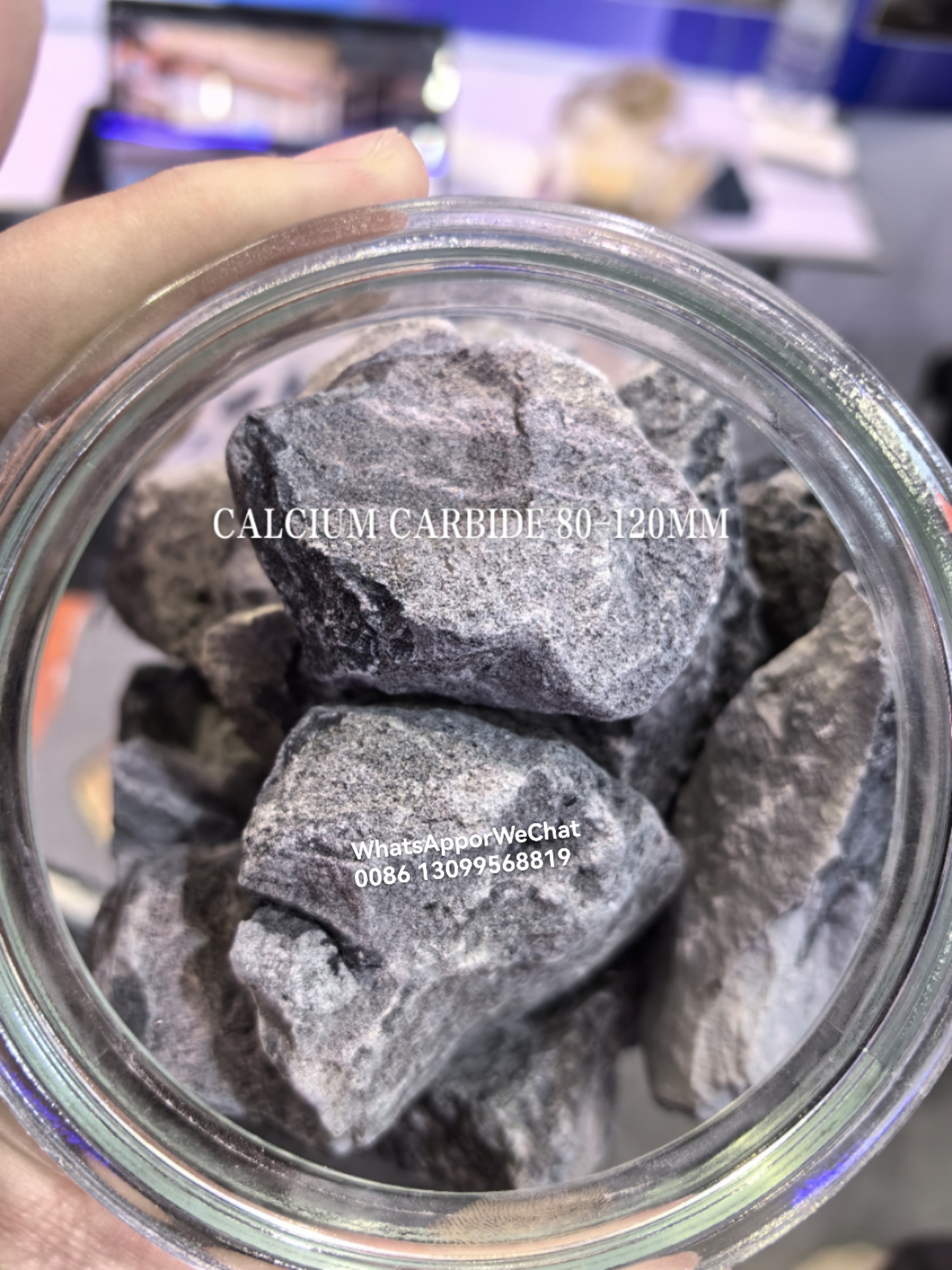
Selecting appropriate particle sizes directly impacts operational efficiency and safety in welding applications. Coarse particles (50-80mm and 80-120mm) suit large centralized acetylene generators where controlled reaction rates prevent gas pressure fluctuations. Medium particles (25-50mm) balance reaction speed with manageable gas generation rates for medium-scale operations. Fine particles (2-7mm and 7-15mm) enable rapid acetylene generation but require precise water addition controls to prevent explosive gas accumulation.
Gas yield correlation with particle size follows inverse relationship patterns—smaller particles produce higher instantaneous gas yields but deplete faster, while larger particles provide sustained, lower-rate gas generation. The 15-25mm particle size range typically yields 260-295 liters per kilogram, making it suitable for continuous welding operations requiring stable gas supply over extended periods.
Quality Standards and Compliance Requirements
International trade of calcium carbide requires compliance with hazardous material regulations, specifically Class 4.3 classification for substances that emit flammable gases upon contact with water. Manufacturers must provide sealed steel drum packaging—typically 50kg or 100kg containers—with full compliant documentation including safety data sheets, certificates of analysis, and dangerous goods declarations.
Quality verification through international inspection agencies such as SGS, BV, CCIC, and CIQ ensures product specifications meet contractual requirements. Chinese National Standard GB10665-2004 establishes minimum purity levels, gas yield requirements, and particle size distribution tolerances. Manufacturers maintaining ISO certification demonstrate commitment to quality management systems covering raw material procurement, production processes, and final product testing.
Sampling protocols involve multiple testing stages: during processing (secondary sampling), container sealing (air pressure testing), and pre-shipment verification. This comprehensive approach ensures gas yield consistency across production batches and identifies any quality deviations before shipment.
Supply Chain Considerations for Industrial Users
Logistics and Transportation Safety
International shipping of calcium carbide requires specialized handling procedures and documentation. Standard container loads carry 22.5 metric tons in 20-foot containers, with ports at Shanghai and Tianjin serving as primary export terminals. Transportation routes must avoid humid conditions and water exposure, with sealed steel drums providing moisture barrier protection.
Lead times typically span 15 working days from deposit receipt or letter of credit confirmation to vessel loading. Minimum order quantities of one container (22.5 tons) establish baseline commercial transactions, though established customers may negotiate flexible arrangements. FOB (Free on Board) and CIF (Cost, Insurance, and Freight) terms represent common trade conditions, with freight costs varying based on destination port and current shipping rates.
Quality Assurance at Destination
Port inspection protocols enable buyers to verify product quality before accepting delivery. Random barrel selection for quality testing provides representative sampling, with不合格results triggering rejection rights without contractual penalty. This approach reduces procurement risk and ensures specification compliance throughout the supply chain.
Manufacturers with integrated operations—from raw material smelting through processing and packaging—maintain end-to-end quality control, reducing variability risks inherent in multi-source supply chains. Direct manufacturer relationships enable responsive technical support and customized specifications for specialized applications.
Technical Specifications for Welding Applications
Industrial calcium carbide specifications emphasize purity levels, gas yield performance, and particle size consistency. Purity measurements exceeding 90% calcium carbide content ensure adequate gas generation capacity. Theoretical maximum gas yield reaches 372 liters per kilogram for pure CaC₂, with industrial grades achieving 260-305 liters per kilogram depending on particle size and purity.
Appearance characteristics—grey or dark grey crystalline structure—provide visual quality indicators. Cross-section analysis reveals purple coloration indicating high calcium carbide content, while grey or white cross-sections suggest lower purity levels. Density measurements of 2.22 g/cm³ provide additional verification parameters.
Production capacity considerations influence supplier selection for large-volume users. Manufacturers operating multiple crushing lines with monthly capacities exceeding 8,000 tons demonstrate capability to supply sustained requirements for major fabrication facilities. Factory visits and pre-qualification audits enable direct assessment of production capabilities and quality systems.
Safety Considerations in Handling and Storage
Calcium carbide presents significant hazards requiring strict safety protocols. Contact with water generates acetylene gas, creating explosion risks in confined spaces. Storage facilities must maintain dry conditions with humidity controls and water detection systems. Handling procedures mandate dry equipment and tools, with emergency response plans for accidental water exposure.
Personal protective equipment requirements include chemical-resistant gloves, safety goggles, and respiratory protection when handling broken containers or during quality sampling. Training programs covering hazardous material handling, emergency response procedures, and first aid protocols ensure worker safety throughout supply chain operations.
Regulatory compliance spans multiple jurisdictions, with United Nations classification UN 1402 establishing international transportation standards. Local regulations may impose additional requirements for storage facility permits, emergency planning notifications, and insurance coverage specifications.
Frequently Asked Questions
What gas yield can I expect from industrial calcium carbide?
Gas yield varies by particle size: 80-120mm particles typically produce 295-305 liters per kilogram, while 15-25mm particles yield 260-295 liters per kilogram. Purity levels above 90% ensure consistent performance within these ranges.
How should calcium carbide be stored for welding applications?
Store in dry, well-ventilated areas away from moisture sources. Sealed steel drums provide adequate protection when intact. Inspect containers regularly for damage or corrosion. Maintain ambient humidity below 60% and avoid temperature fluctuations that cause condensation.
What particle size is optimal for oxyacetylene welding operations?
Particle sizes of 15-25mm or 25-50mm suit most welding applications, providing balanced reaction rates and sustained gas generation. Larger particles (50-80mm) suit high-capacity centralized generators, while smaller particles (7-15mm) enable rapid gas generation for intermittent operations.
How can quality be verified before bulk purchase?
Pre-shipment port inspection enables random barrel sampling and testing. International inspection agencies (SGS, BV) provide independent verification of purity, gas yield, and particle size distribution. Manufacturers supporting on-site inspection demonstrate quality confidence.
What are the minimum order quantities and lead times?
Standard minimum order quantities range from one container (22.5 tons). Lead times typically span 15 working days from deposit receipt, with established customers potentially receiving expedited service for repeat orders.
News Hotspot



Our Main Products
Can't find the service you're looking for? Contact us!
To inquire about our products, please leave your email to us and we will contact you within 24 hours.